Why do you need Fresh Intranet when you can also use standard SharePoint?
The popularity of Microsoft SharePoint as an intranet is growing rapidly. Organizations are already working in Microsoft 365 on a daily basis, so they want to stay within that familiar environment as much as possible. This has several advantages. Employees no longer have to switch between different systems, information stays within the same secure environment and organizations get more value out of the Microsoft licenses already in place.
For IT, this is a logical choice, while communication sometimes still has doubts. Especially when it comes to management, branding, findability and the possibilities to really reach employees in a targeted way. Still, for many organizations, standard SharePoint forms a strong basis for an intranet. But if you want to get more out of internal communication, content management and employee engagement, thenFresh Intranet can be a valuable addition.
In this blog, we look at when standard SharePoint is sufficient and when a solution such as Fresh Intranet is a better fit. We also take a look at the advantages, disadvantages and differences between the two solutions.
When is standard SharePoint sufficient as an intranet?
Before making a choice, it is good to ask the question: what is the purpose of our intranet? Is it primarily meant to be a central place for documents, news and practical information? Or should it also actively contribute to communication, engagement and knowledge sharing? The organization behind it also plays a big role. Who is going to manage the intranet? Is there a communications department that regularly publishes content and wants to run campaigns? Or will IT manage it and should the intranet remain clear and simple?
For organizations where the requirements around the intranet are relatively straightforward, standard Microsoft SharePoint may already be sufficient. Especially when there are no extensive wishes around internal communication, branding or target group-oriented content and the intranet is not going to be actively managed on a daily basis.
The benefits of standard SharePoint For organizations looking for an intranet that is clear, reliable and well integrated within Microsoft 365, standard Microsoft SharePoint offers many advantages.
Works entirely within the existing Microsoft 365 environment;
Employees often already know the environment, making adoption easier;
Security, permissions and governance remain centrally managed within Microsoft;
Relatively quick to implement;
Organizations are getting more out of the Microsoft licenses already in place;
Management remains manageable when requirements and design are limited.
The disadvantages of standard SharePoint Once communication, engagement and ease of use become more important, organizations sometimes run into limitations.
Less extensive opportunities for branding and personalization
Targeted communication to specific audiences requires additional setup
Fewer options for newsletters, notifications and expanded analytics
Findability of information becomes more challenging in larger environments
Additional needs around AI, content management or communications regularly require additional solutions or customization
But what if Fresh Intranet is still a step too far?
Not every organization has an immediate need for a comprehensive intranet solution such as Fresh Intranet. Sometimes standard SharePoint largely suffices, but additional needs arise. In that case, organizations regularly choose to expand SharePoint step by step. Think of solutions within the Viva Suite, such as Microsoft Viva Connections for a more centralized employee experience or Microsoft Viva Engage for more interaction and community building. Customization is also often used to add specific functionality that is missing by default.
This can be an interesting solution for organizations that find that standard SharePoint falls slightly short, but where the need for additional functionality is still relatively targeted. You can expand SharePoint on specific components that are important to the organization at that time.
The benefits of extending within SharePoint Extending SharePoint with additional solutions or customization offers organizations more flexibility to add specific requirements and functionalities.
All of the above benefits of standard SharePoint
More flexibility to accommodate specific needs
You can make targeted investments in parts where there is a need at the time
Interesting for organizations that want to expand or optimize their intranet step by step
The disadvantages of extending within SharePoint At the same time, this approach also brings additional management and dependencies, especially when multiple extensions are combined.
Customization requires maintenance and regular updates to Microsoft updates
Several separate solutions can create less consistency in use and management
Development projects often take longer than expected beforehand
More reliance on external developers or specific knowledge
Additional expansions can make long-term management more complex
When is Fresh Intranet a good choice?
Do you really want to get everything out of Microsoft SharePoint and stay away from customization? Then Fresh Intranet is a strong choice. Especially for organizations where internal communication plays an important role and the intranet needs to be more than just a place for news and information.
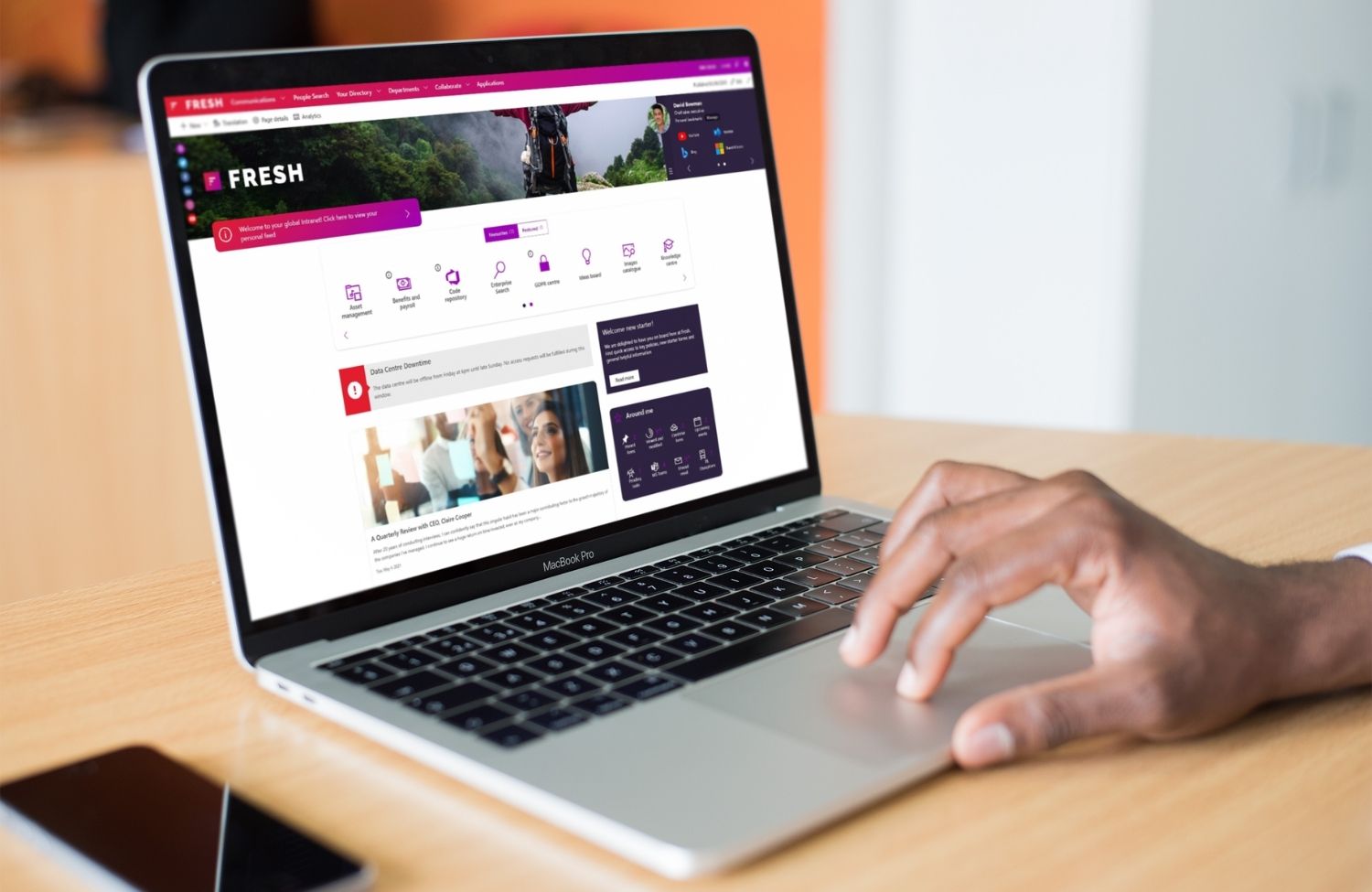
Where standard Microsoft SharePoint provides a strong foundation, Fresh Intranet builds on where SharePoint stops. Especially in areas such as targeted communication, usability, AI and content management. Think more extensive branding capabilities, smarter content management, targeted communication, newsletters, notifications and extensive analytics and insights into how content is actually being used.
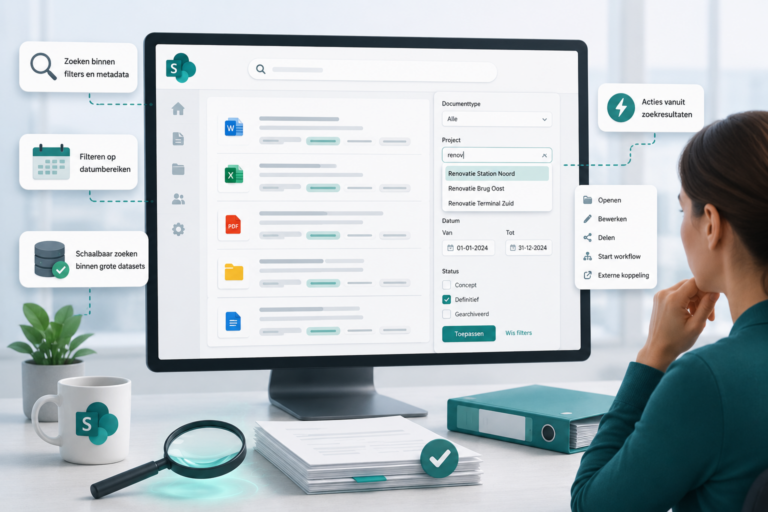
In addition, AI is playing an increasing role within intranet environments. Fresh supports this with smart search functionality and AI support for content and findability. As a result, employees find the right information faster and the intranet is used more actively as a communication platform instead of just as a place to store information.
The benefits of Fresh Intranet Fresh combines all the benefits of standard Microsoft SharePoint, such as working within the familiar Microsoft 365 environment, centralized management and leveraging existing Microsoft licenses, with additional functionality focused on communication, adoption and ease of use.
More than 75 additional webparts and functionalities, such as a facebook, birthdays, news webparts, notifications and much more
Simpler management for communications departments, without depending on IT or customization
Intranet-specific AI support, helping with search, discovery and content creation
Greater insight into usage, reach and interaction through comprehensive analytics
More opportunities for targeted communication and personalization
Expanded branding and styling capabilities for an intranet that truly fits the organization
Quick and easy implementation
And many more features, found in the Feature Catalog of Fresh Intranet
The disadvantages of Fresh Intranet Fresh offers many additional features, but it is important to carefully consider whether they really fit the needs and goals of the organization.
Because of the many possibilities, it is important to think carefully beforehand about the layout and wishes of the intranet. Of course, we can support this process and think along with you about what best suits the organization.
Fresh continuously evolves with quarterly updates, keeping support and management important
To really get the most out of the platform, a clear intranet strategy and good guidance is valuable
Which choice suits you?
There is no standard answer as to which intranet is best; it depends entirely on your organization, goals and way of working. For some organizations, standard Microsoft SharePoint provides everything needed to properly inform employees and collaborate within Microsoft 365. Other organizations actually notice a need for more communication functionalities, better findability, more targeted communication and more ease of use. If so, the additional investment in Fresh licenses is worth considering.
An intermediate step with extensions or customization can also fit well in some situations. The most important thing is that the intranet fits the way your organization works as well as the people who have to work with it.
Whatever the direction, we are happy to help make that choice. Whether it is a strongly designed standard SharePoint intranet, additional extensions or a completely Fresh Intranet, we think along with you about what best suits your organization. In addition, we not only guide the selection process, but also support the design, implementation and further development of the intranet.